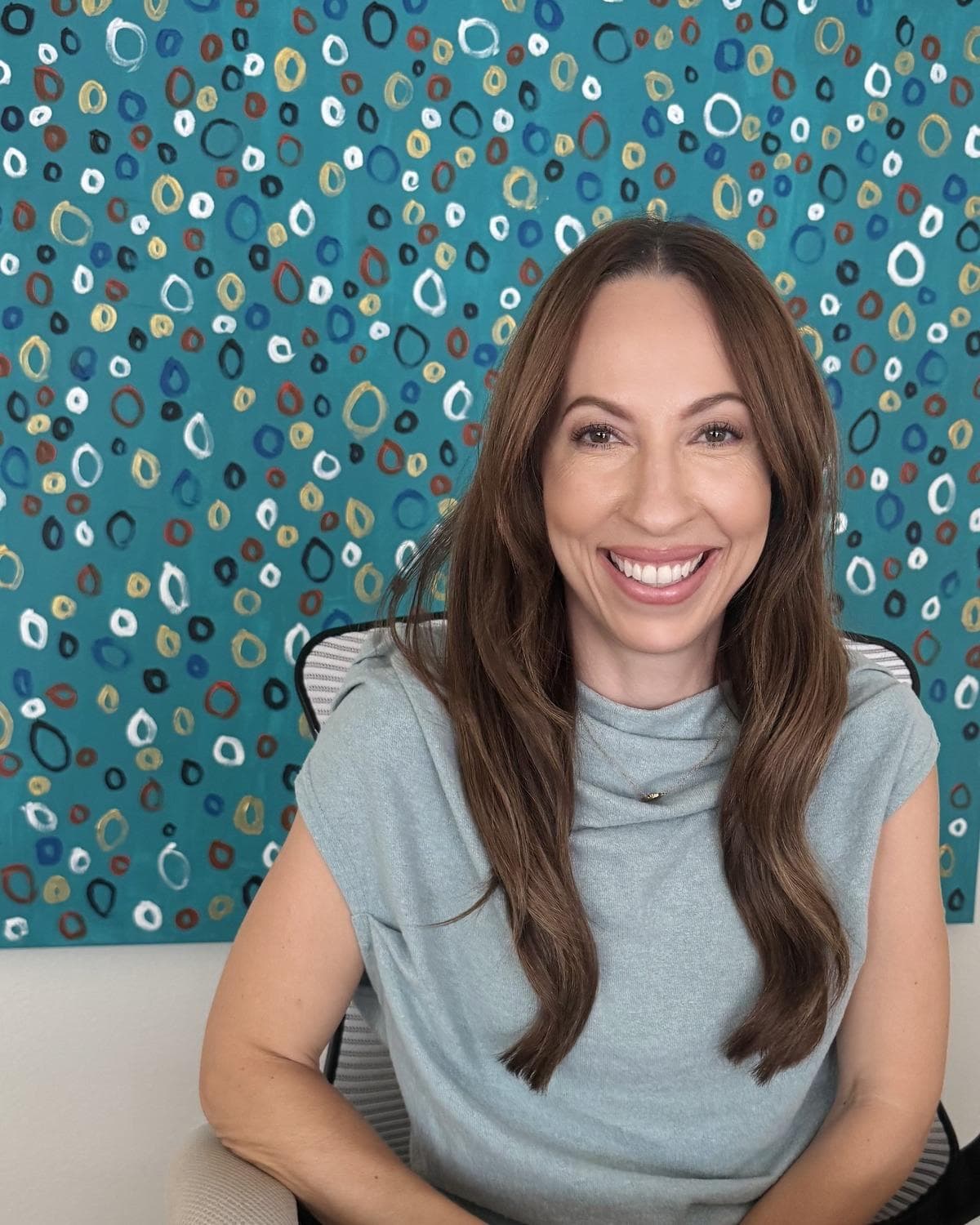
Hey, it's Candice here.
A lot of the people who end up working with me spent months, sometimes years, almost booking. They had a therapist's profile open in a tab and closed it. They told themselves they'd look into it after the busy season. Then the busy season turned into the next one.
When I ask what finally tipped them over, the answer is often surprisingly practical: "I realized I could do it from home."
So if you're in California and you've been wondering whether online therapy for anxiety actually works, how it's set up, and what you'd be signing up for, here's the honest version.
Does online therapy work for anxiety?
Yes. Video therapy has been studied a lot, and for anxiety it's generally found to work about as well as sitting in an office together. That fits what I've seen in my own practice, which has been fully online since I opened it.
Here's what I think gets missed: for anxiety specifically, being in your own space can be a real advantage.
When you're anxious, the logistics of therapy can turn into their own source of stress. The drive, the parking, the waiting room, getting back to work on time. When you take all of that out, more of your energy goes into the actual work. And a lot of the skills we practice, like breathing, noticing what your body is doing, or catching a spiraling thought, are things you'll need at home, on your couch, at 11 p.m.
How online therapy works in California
The practical details are simple:
- Sessions are by secure video, 50–55 minutes, usually weekly to start.
- You need to be physically in California during each session. I'm licensed as an LCSW in California (license #86047), and that license covers clients located in the state. That can be Los Angeles, San Diego, the Bay Area, Sacramento, a small town in the Central Valley, anywhere in California.
- All you need is a private spot, a phone or laptop, and a decent connection. Some people take sessions from their car in a parking lot, and that's completely fine.
- I'm private pay and can give you a superbill for possible out-of-network reimbursement. (I wrote a whole post on what therapy costs and how superbills work.)
What happens in the first session
I'm almost done with my EMDR training. The first weekend, I was wiped out and a little exposed. Being a beginner again, in front of colleagues, takes something out of you. By the third weekend, things were clicking. And I realized I'd just had my clients' experience, in that exact order.
That's the first session. It asks a lot of you. Here's what it looks like:
- What brought you in. What's been going on, how long it's been happening, and what you'd want to be different.
- Some history, as much or as little as feels okay. You don't have to tell me everything on day one.
- How anxiety shows up for you. In your body, your thinking, your sleep, your relationships, your work.
- A starting plan. By the end, we'll have a rough picture of what we're working on and how.
You don't need to prepare. You don't need to have the right words. "I'm not sure why I'm here, I just know something feels off" is a completely valid way to start.
And here's the part that still gets me after ten years. I check in at the end of every first session, and the thing I hear most is relief. Maybe it's setting down something you've been carrying alone. Maybe it's the simple feeling of okay, I think I'm in the right place.
What we actually do in anxiety therapy
My approach is warm and practical. We talk, but we also work. I draw on CBT, DBT, ACT and mindfulness-based approaches, fitted to you rather than run as a script. In real life, that might mean:
- Learning to notice the early signs of anxiety: the tight jaw, the shallow breath, the "I'm so behind" thought that shows up long before the panic does.
- Calming your nervous system with tools that have research behind them, like paced breathing.
- Catching thoughts that feel like facts and testing them, instead of arguing with yourself.
- Building a more accurate way of talking to yourself, one you actually believe, not forced positivity.
You'll leave sessions with something to try between them, not just something to think about.
Is online therapy right for you?
Online therapy for anxiety tends to be a great fit if:
- Your schedule is packed and adding a commute is the thing that's kept you from starting.
- You're "fine on the outside" and quietly running on empty.
- You want real, evidence-based tools, not only a place to vent.
- You'd feel more relaxed opening up from your own space.
It may not be the right fit if you're in crisis right now. If that's you, please call or text 988 (Suicide & Crisis Lifeline) or go to your nearest emergency room. Some situations need more support than weekly online sessions can give, and I'll always be honest with you about that.
How to get started
You don't have to be sure. You just have to be curious.
- Want to say hello first? Book a free 10-minute phone call. Ask me anything and get a feel for how I work. No pressure, no commitment.
- Ready to begin? Book your Initial Session.
In ten years, nobody has ever told me they started therapy too early. Plenty have told me they wish they'd started sooner.
Frequently asked questions
Is online therapy as effective as in-person therapy for anxiety?
For most people with anxiety, research suggests video therapy works about as well as in-person therapy. Many clients say telehealth is what finally made therapy fit their life.
Can I see a California therapist online if I live anywhere in the state?
Yes. Candice Beaton, LCSW, is licensed in California and works with clients anywhere in the state. You need to be physically located in California during each session.
How long is an online therapy session?
Sessions are 50–55 minutes, usually weekly at first. Many people space sessions out as things settle.
Do you take insurance?
Candice is a private-pay practice and provides superbills you can submit to your insurance for possible out-of-network reimbursement. See Rates & Insurance.
What if I'm not sure therapy is what I need?
Start with a free 10-minute phone call. You can also read Do I need therapy, or do I just need some tools? on Substack.
About the author
Candice Beaton, LCSW (California license #86047) is a Los Angeles–based psychotherapist who has been in clinical practice for ten years and specializes in anxiety, burnout and high-functioning stress. She works with adults online across California using CBT, DBT, ACT and mindfulness-based approaches, offers therapy intensives and the Under Pressure workplace program, and writes The Steady Mind on Substack. Read more about Candice.
Disclaimer: This article is for education and isn't a substitute for individual care. If you're in crisis, call or text 988.
Candice Beaton, LCSW
Licensed psychotherapist · Modern Therapy CB